Why I Upgraded My BMW S 1000 RR With a Full Titanium Akrapovič Header

The BMW S 1000 RR is already an exceptionally capable motorcycle straight from the factory. With 205 horsepower, advanced ShiftCam technology and a chassis engineered for serious performance, it does not exactly need help being fast.
But motorcycle upgrades are not always about fixing a weakness. Sometimes, they are about unlocking more of the character that was already hiding underneath.
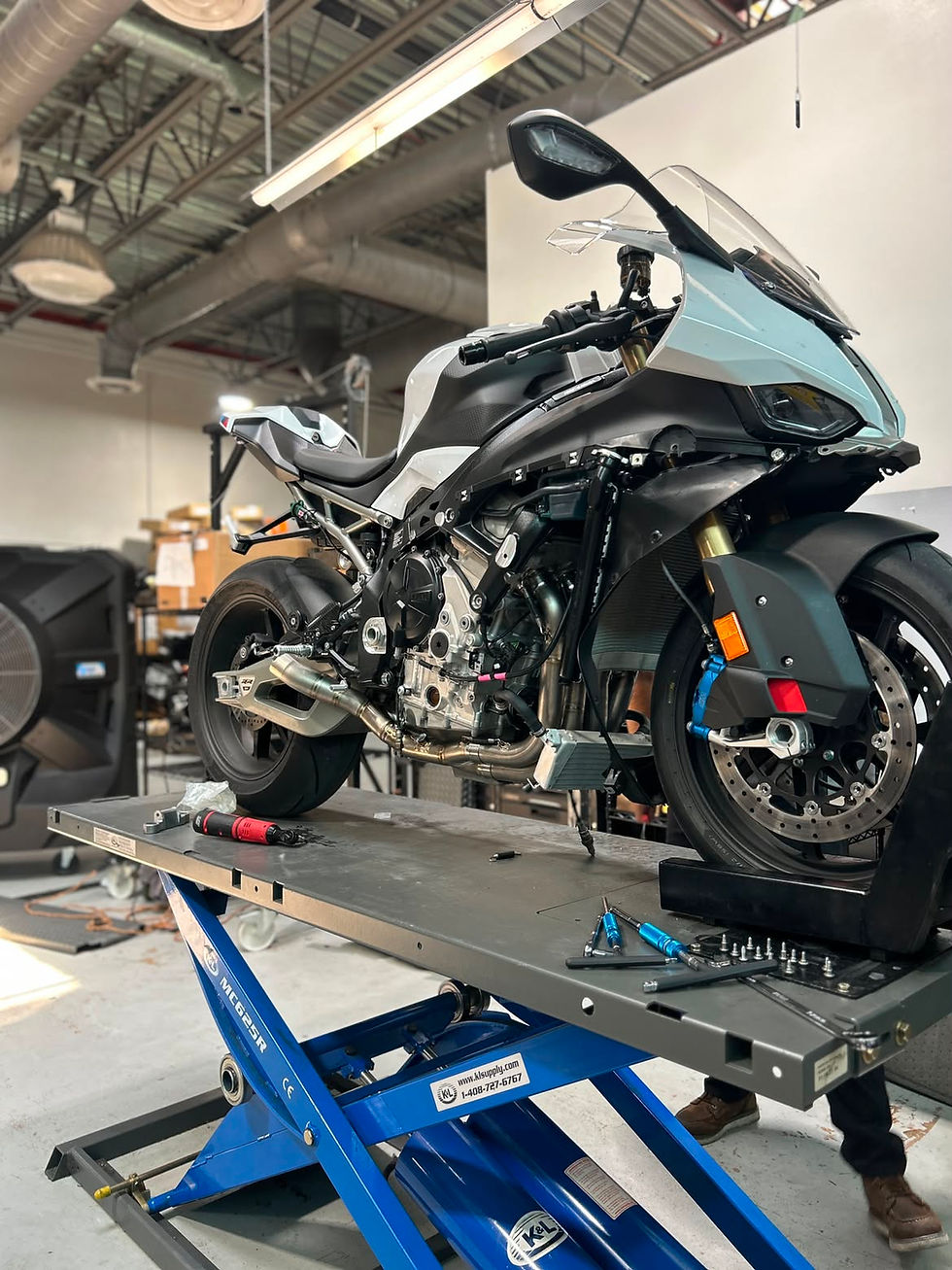
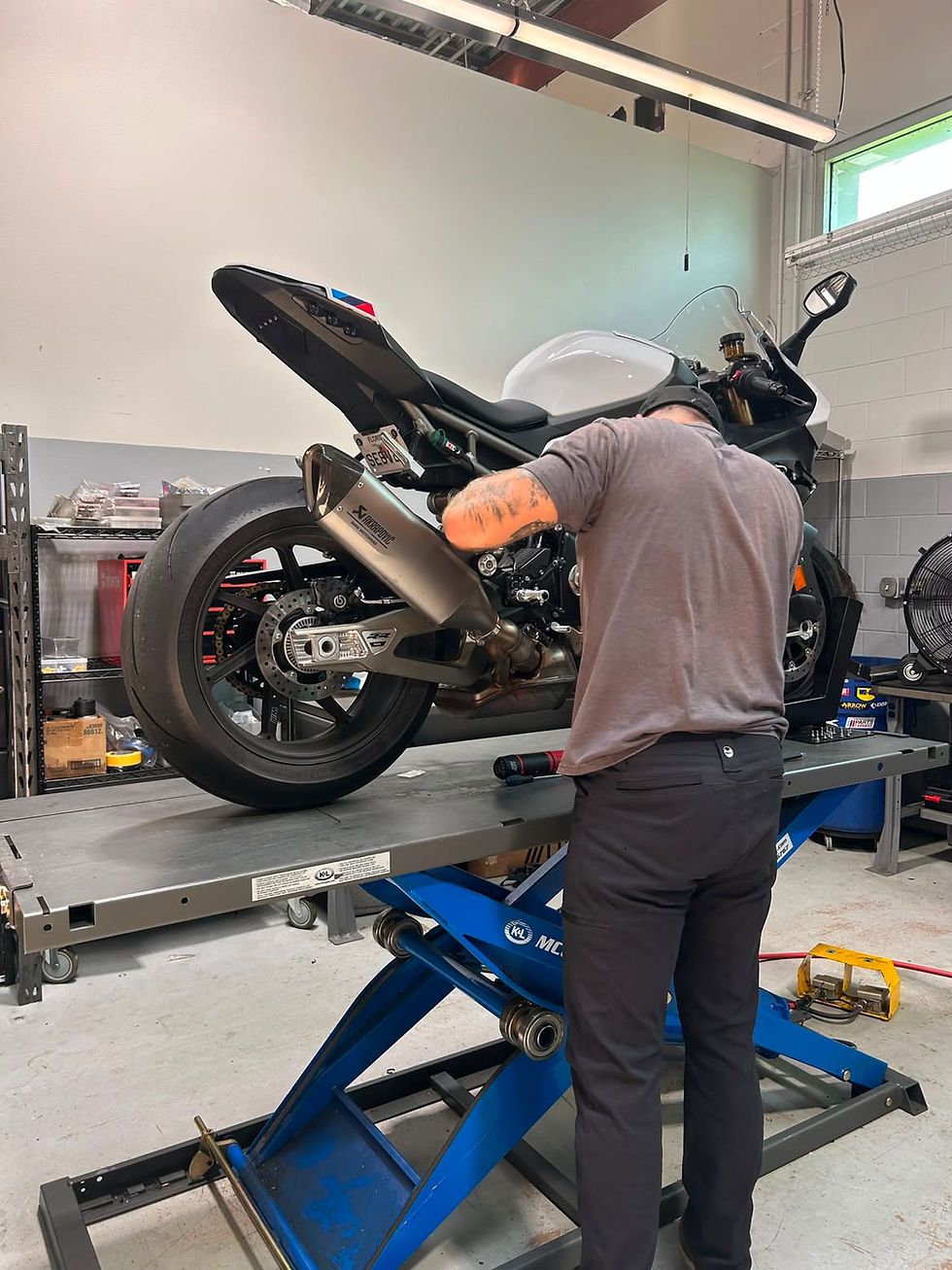
That was the goal behind installing the Akrapovič titanium header on my S 1000 RR. Combined with the factory Akrapovič muffler, the header converts the exhaust into a much freer-flowing full system and changes the bike in several meaningful ways: stronger midrange performance, significantly reduced weight, a much more aggressive sound and a cleaner race-inspired appearance.
More Performance Where You Can Actually Feel It
The most important performance benefit is not simply a higher peak-horsepower number. It is the additional power and torque produced through the middle of the rev range.
Akrapovič’s published testing for the 2025 S 1000 RR titanium header shows an increase of approximately 7.7 kW, or about 10.3 horsepower, at 8,550 rpm, along with an additional 8.8 Nm, or roughly 6.5 lb-ft of torque, at 8,450 rpm. These figures represent Akrapovič’s controlled testing and actual results can vary depending on the motorcycle, fuel, conditions and configuration.
That midrange improvement is particularly valuable on the street. Peak power occurs near the top of the tachometer, but the 8,000-to-9,000-rpm range is where the motorcycle is often accelerating hard through a gear. Additional torque in that area can make the throttle feel stronger, improve roll-on acceleration and help the bike pull more forcefully when exiting a corner.
The S 1000 RR was already extremely fast. The titanium header does not completely reinvent it, but it can make the engine feel less restricted and more urgent as the revs build.
A Significant Reduction in Weight
One of the biggest advantages of titanium is its ability to provide strength and heat resistance without the weight of a conventional factory exhaust assembly.
Akrapovič lists a weight reduction of approximately 6.4 kilograms, or about 14.1 pounds, for the titanium-header configuration compared with the corresponding stock components.
Removing more than 14 pounds from a motorcycle is meaningful, especially when the stock S 1000 RR has a claimed road-ready weight of approximately 437 pounds.
The exhaust sits relatively low on the motorcycle, so this is not identical to removing rotating mass from the wheels. Still, reducing overall mass benefits several areas:
The motorcycle has less weight to accelerate and decelerate.
Direction changes may feel slightly easier.
The power-to-weight ratio improves.
The bike becomes easier to maneuver around the garage or paddock.
The exhaust contributes less unnecessary bulk beneath the motorcycle.
It is a performance upgrade that works even when the engine is not producing additional power.
A Completely Different Sound
The sound may be the most immediately noticeable change.
The factory Akrapovič muffler gives the S 1000 RR a sporty appearance and a slightly stronger tone, but much of the factory exhaust restriction and sound suppression remains in the original header and catalytic-converter assembly.
Replacing that section allows the inline-four engine to sound considerably more aggressive. The result is a deeper idle, a sharper bark during throttle blips and a much more intense tone as the motorcycle climbs through the rev range.
Akrapovič lists a sound level of 112.7 dB at 6,500 rpm when its titanium slip-on is combined with the optional headers, although the precise result depends on the exact exhaust configuration and test method.
In practical terms, this is not a subtle upgrade. It gives the motorcycle the kind of raw, mechanical soundtrack that better matches its superbike appearance and performance.
That extra volume also comes with responsibility. A full system can be extremely loud, particularly during cold starts or in enclosed areas. Being considerate around residential neighborhoods, leaving early in the morning and prolonged high-rpm riding remains important.
Warranty: What the Installation Does and Does Not Mean
One of my biggest concerns was protecting the BMW factory warranty.
The header was installed by the BMW dealership, without an aftermarket ECU flash or engine tune, and the dealership documented the installation and confirmed its position regarding warranty coverage. That is a much more conservative approach than installing an unknown exhaust, altering the ECU and leaving the dealership unaware of the changes.
However, it would be inaccurate to say that any exhaust modification can have absolutely no effect on any future warranty claim.
BMW motorcycles sold in the United States generally include a three-year or 36,000-mile limited new-vehicle warranty. Under federal warranty law, simply using an aftermarket part does not automatically void the entire motorcycle’s warranty. A manufacturer may still deny coverage for a particular failure when it can demonstrate that the aftermarket component or its installation caused or contributed to that failure.
In other words, installing the header does not erase the warranty on unrelated systems such as the TFT display, suspension or electronics. But a future claim involving the exhaust, emissions equipment or an engine issue allegedly connected to the exhaust could receive additional scrutiny.
For that reason, the installation was handled carefully:
The BMW dealer performed the work.
No unauthorized ECU flash was installed.
The factory air filter remained in place.
The installation and the dealer’s recommendation were documented on the repair order.
All invoices and part information were retained.
That documentation matters. It establishes exactly what was installed, who installed it and what the dealership represented at the time.
Improved Appearance and Build Quality
The S 1000 RR is a visually dramatic motorcycle, but the bulky factory exhaust hardware underneath the engine is largely designed around emissions, noise and manufacturing requirements.
The titanium header gives the lower half of the motorcycle a much cleaner and more purposeful appearance. The visible pipework looks more like a racing system, and titanium naturally develops blue, bronze and purple heat coloring over time.
That coloring is not usually a defect. It is part of titanium’s character and creates a finish that becomes more distinctive with use.
Akrapovič describes titanium as a race-proven material, and the quality of the welds, bends and overall fit is one of the reasons its systems are commonly associated with premium European performance motorcycles.
The upgrade therefore improves more than the dyno chart. It makes the motorcycle look more special even when it is sitting still.
A More Complete Akrapovič System
The factory Akrapovič muffler is an excellent finishing piece, but by itself it functions primarily as a lightweight slip-on. The titanium header completes the system by replacing the more restrictive upstream exhaust components.
That creates a more cohesive package. Instead of having an Akrapovič can attached to an otherwise factory exhaust, the bike now has an exhaust path designed around performance, weight reduction and sound.
For owners who already have the factory Akrapovič muffler, the header can therefore feel like the upgrade that finally lets the exhaust reach its full potential.
Was It Worth It?
For someone looking only for the cheapest horsepower possible, a premium titanium exhaust may not be the most economical modification. The S 1000 RR already has more performance than most riders will ever fully use, and Akrapovič titanium components command a premium price.
But the value of this upgrade comes from the complete experience.
It reduces substantial weight, strengthens the engine’s midrange, transforms the sound, improves the appearance and gives the motorcycle a more authentic race-bike character. At the same time, having the work completed and documented by the dealership—without an aftermarket ECU flash—provides a more warranty-conscious path than a heavily modified or undocumented setup.
The S 1000 RR did not need a full titanium header to be an incredible motorcycle.
But now it looks, feels and sounds much closer to the motorcycle I always believed it could be.


Comments